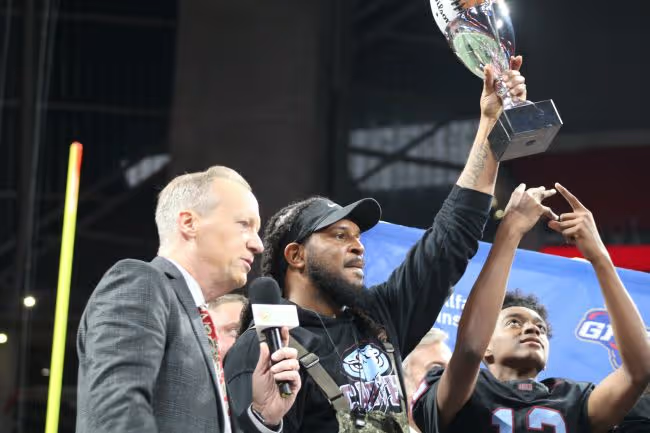
Matt Knowles of Source Atlanta speaks about Sports Medicine heading into the upcoming athletic season
.avif)


.avif)

.avif)














The 2025 Corky Kell + Dave Hunter Classic is proud to be sponsored by Northside Hospital. Sports Medicine is a very important part of all athletics and Matt Knowles, Director of Source Atlanta, a partner of Northside Hospital, details what athletes, parents, coaches, and athletic trainers should do to prevent major setbacks in activities. He also goes over what causes non-contact injuries.
Here are the three things he says that athletes need to focus on in general.
“Athletes should focus on acclimatization, hydration, and awareness,” Knowles said.
Acclimatization needs to be gradual for the players by easing their way into summer training. Georgia High School Association (GHSA) guidelines require a structured acclimatization period, which helps the body adjust safely to heat stress over time.
Hydration is very important for athletes to make the most out of all activity. Consistent and proactive hydration before, during and after activity is essential. Athletes should never wait until they’re thirsty and should avoid energy drinks or excessive caffeine.
Athletic trainers and coaches should monitor wet bulb globe temperature (WBGT) readings daily. Activity modifications, including reduced practice time, more frequent breaks, or even cancellations, must be based on these readings.
Access to shaded areas, cold towels, ice immersion tubs, and scheduled rest periods must be standard during summer practices.
Athletes and parents should be educated on early signs of heat illness and encouraged to speak up if they feel unwell. Open lines of communication with athletic trainers.
Knowles goes in depth on what causes non-contact injuries, which occur frequently in sports with repetitive motions.
“We consistently see non-contact injuries that stem from overuse and poor movement patterns, particularly in sports with repetitive motions,” he said.
Lower Extremity injuries with runners and jumpers are common things to happen. These often arise from sudden increases in training load, poor movement mechanics, and insufficient recovery. Without proper progression and support (such as appropriate footwear and surface management), the risk for overuse injuries like tendinopathies and stress reactions significantly increases.
Upper Extremity injuries are usually pertaining to swimmers and athletes who have to throw something. High-volume, repetitive motion without adequate rest, strength, or technique refinement can lead to shoulder and elbow dysfunction. Core and scapular instability further compound the strain on joints over time.
Regarding the ways athletes can prevent injuries from happening, here are the three things that they all should consistently keep a close watch on.
“Athletes should focus on their nutrition, recovery, and strength and conditioning to avoid injury,” Knowles said.
If your school or organization does not have an Athletic Trainer and you would like more information on Source Atlanta’s services, please email kaci.griffin@sourceatlanta.com and if your athletes need an Athletic Trainer one on one consultation, please reach out to the email above or call 1-470-393-9082.